The Analog Panopticon - What the Soviet Union Teaches Us About Digital Surveillance

- Published on
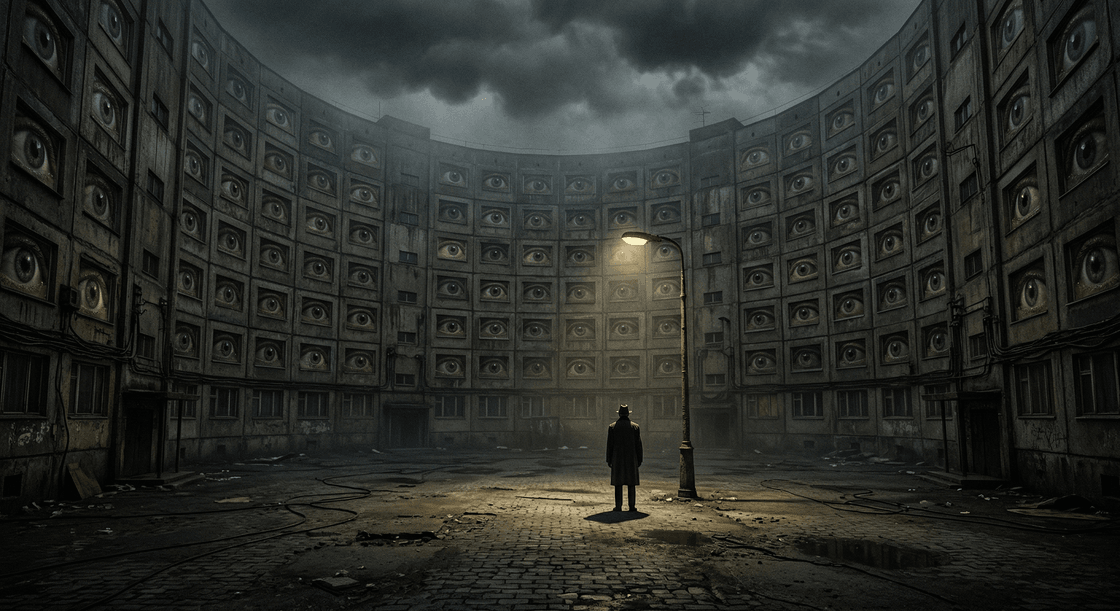
The historical parallel between modern tech legislation and 20th-century authoritarianism is incredibly relevant. While mass surveillance and censorship don't inherently lead to communism specifically—they are the foundational tools of any totalitarian regime, whether fascist or communist—the Soviet Union stands as the ultimate textbook example of how absolute control over speech and privacy destroys a society.
The Bolsheviks didn't just take over the government; they systematically dismantled the very concept of private life and free thought. What we see today with digital tracking and algorithmic censorship is essentially what the Soviet Union did, but automated and executed on a terrifyingly efficient scale.
Here is exactly how the Soviet Union used mass surveillance and the death of free speech to enforce total control, and why it mirrors today's digital landscape:
The Informant Network (Analog Mass Surveillance)
Before algorithms and operating-system-level tracking, the Soviet Union used human beings to build a panopticon. The secret police—from the Cheka to the NKVD, and later the KGB—relied on a massive, pervasive network of civilian informants.
Neighbors spied on neighbors, and children were literally glorified by the state for reporting their own parents for "anti-Soviet" conversations. This created a society paralyzed by paranoia. You couldn't speak your mind in your own kitchen because you never knew who was listening. Today's digital surveillance infrastructure achieves this exact same chilling effect without needing to recruit a single human spy.
Glavlit and the Monopoly on Truth
The Soviet state didn't just casually censor bad words; they created an official censorship body called Glavlit. Every single newspaper, book, radio broadcast, and piece of art had to be pre-approved by the state, completely eradicating the "Overton Window" of acceptable public discourse.
There was no free press, and therefore no error correction. When the state implemented disastrous agricultural policies that led to the starvation of millions (the Holodomor), it was illegal to report on it or even acknowledge it. When you kill free speech, you allow catastrophic government failures to go unchecked because the victims are legally silenced.
The Propiska System (The Original Identity Checkpoint)
Consider the modern fear of needing a government ID just to log onto the internet or access basic services. The Soviet Union implemented the propiska—a mandatory internal passport and registration system.
Citizens could not move to a new city, get a job, or secure housing without state permission and proper documentation. It was an analog version of tying a digital ID to your physical existence. If you expressed dissenting thoughts, your propiska could be revoked, effectively exiling you from society, employment, and food rations.
The Criminalization of Independent Thought (Article 58)
Under Stalin, the infamous Article 58 of the penal code criminalized "anti-Soviet agitation and propaganda." Because the definition of "anti-Soviet" was intentionally vague, it could be applied to a joke, a diary entry, or possessing a banned book.
Millions of people were sent to the Gulag system simply for speaking. This forced the entire population into a state of "doublethink"—believing one thing internally but publicly chanting the state-mandated slogans just to survive.
The Erasure of History
Because the state had absolute control over information, they actively rewrote history to suit the current narrative. When a political figure fell out of favor, they weren't just executed; they were literally airbrushed out of official photographs and deleted from encyclopedias.
The public lost its grip on objective reality. When citizens don't know the true history of their own country, they have no foundation upon which to challenge the government's current actions.
The Bottom Line
The terrifying part of looking back at the Soviet Union is realizing how much effort it took them to monitor everyone manually. Today, the infrastructure required to track movements, log conversations, and block unapproved literature doesn't require an army of secret police. It can be built quietly into the operating systems of the phones we carry in our pockets.